August 4, 2026
Web Design for Massage Therapists: 2026 Verdict
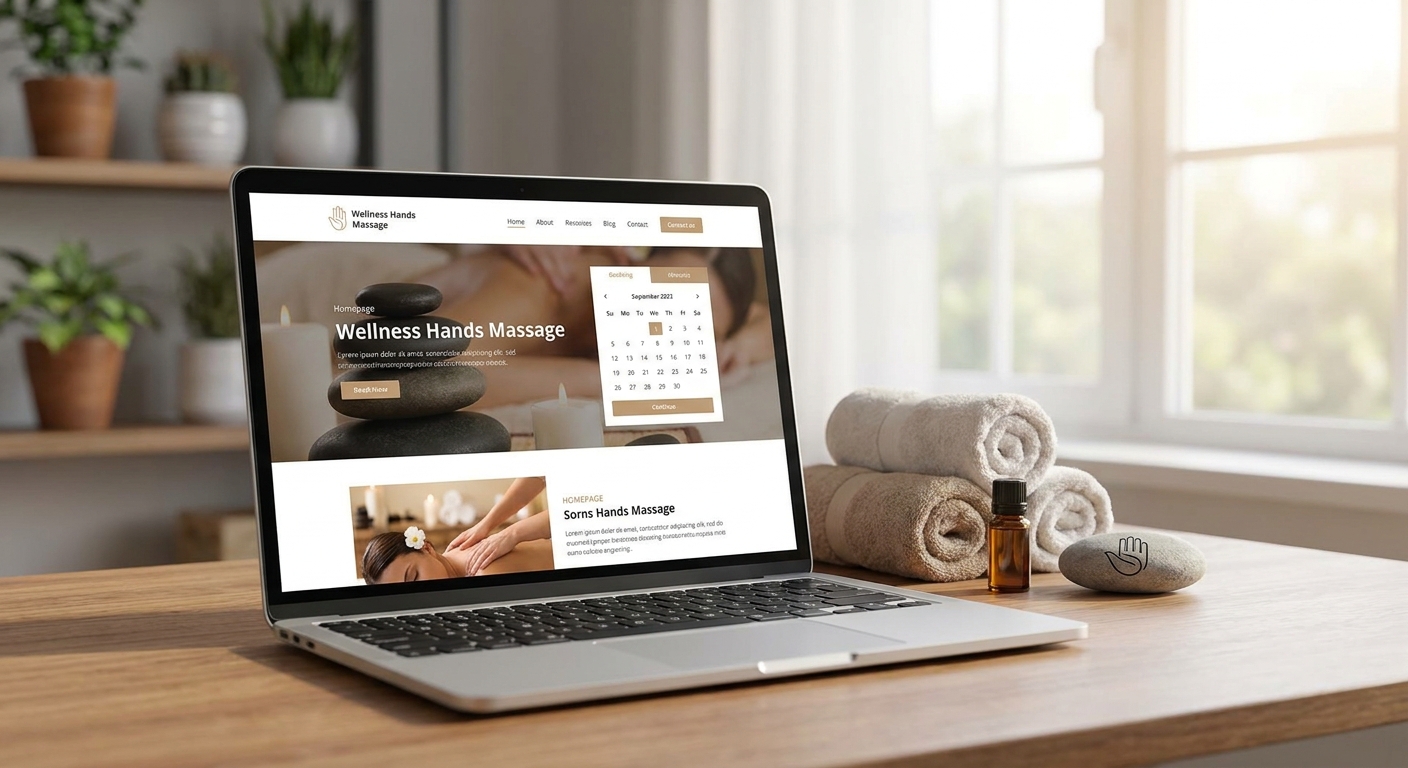
Massage therapists lose bookings to sites that load slow, hide the booking button, or look like every other spa template online — this guide breaks down what a massage therapy or day spa website actually needs to convert visitors into booked sessions in 2026.
- Solo practitioners: Nuvora's Starter plan covers one location and one booking calendar — Buy.
- Multi-room day spas need integrated scheduling across therapists — the Growth plan handles that — Buy.
- Franchises or clinics needing custom intake forms should request a Tailored quote — Consider.
- Generic template builders like Wix or Squarespace save money upfront but cost bookings later — Skip for anything beyond a hobby practice.
- Web design for massage therapists lives or dies on booking friction and mobile load speed, not on photo filters.
Why this matters
A massage therapy client rarely calls to book. They land on your site from a phone, check your availability, and either book in the next 90 seconds or close the tab and pick the next result on Google. Every extra click between "I want a 60-minute deep tissue massage" and a confirmed slot loses a percentage of that traffic.
Day spas and solo practitioners compete on trust signals a chain wellness brand can't fake — real photos, real availability, real reviews. A site built on a generic theme flattens all of that into the same look every competitor already has. Custom-built sites win because they can show the actual treatment room, the actual therapist, and the actual open slot — not a stock photo of someone else's hands on someone else's back.
Who this is for
This guide is for solo massage therapists, multi-therapist day spas, and wellness studios adding massage as a service line. If you're comparing web design for massage therapists against a generic small-business template, the difference shows up in booking conversion, not in how the homepage looks in a screenshot. Nuvora builds sites for service businesses that live or die on getting the phone-to-booking path right.
What to look for in web design for massage therapists
Online booking that doesn't lose the sale
Your booking widget is the actual product of your homepage — everything else is supporting cast. A booking flow that requires account creation before showing available times drops a real share of mobile visitors before they ever pick a slot. The best setups show open 60- and 90-minute slots on the same screen as the service description.
Mobile-first layout, not mobile-adjusted
Most massage bookings start on a phone, often searched right before or after a workday. A site designed desktop-first and then squeezed onto mobile usually buries the booking button below three scrolls of copy. Mobile-first means the booking action is visible without scrolling on a 6-inch screen.
Photos that build trust without over-promising
Stock photos of generic spa candles read as filler, not proof. Real photos of your treatment room, your therapist's hands at work, and your actual space signal that the business behind the site is real and operating today. This matters more for massage than almost any other local service — clients are trusting a stranger with physical touch.
Local SEO built for "massage near me" searches
Massage therapy is a hyper-local search category. A site without a claimed Google Business Profile, location pages, and service-specific copy loses ranking to competitors who bothered to set those up. Local pack visibility drives more first-time bookings than any paid ad for most solo practices.
Site speed under Core Web Vitals thresholds
Google's Core Web Vitals flags any page with a Largest Contentful Paint slower than 2.5 seconds. A slow-loading booking page doesn't just hurt rankings — it hurts conversion directly, because a client comparing three local massage sites on their phone won't wait for the third one to load.
ADA-compliant booking and intake
Massage clients skew older and include people managing chronic pain or mobility limitations — exactly the population most likely to rely on screen readers or keyboard navigation. A booking form that can't be completed without a mouse locks out a segment of your actual client base, not a hypothetical one.
Top picks
Starter — the solo therapist's pick. Built for one practitioner, one location, and one booking calendar. Covers design, hosting, and support under a flat monthly plan with no upfront build fee. Verdict: Buy if you're a single-room practice replacing a DIY site or starting fresh in 2026.
Growth — the multi-room day spa pick. Supports multiple therapists, layered scheduling, and stronger local SEO for spas competing across a wider service area. This is the plan for a business running two to eight practitioners under one roof. Verdict: Buy if you're managing more than one calendar and need the site to keep them straight.
Tailored quote — the custom-integration pick. For franchises, multi-location chains, or clinics that need intake forms tied into a specific practice management system. Scope and price get quoted directly rather than fit into a standard plan. Verdict: Consider if your booking or intake needs are genuinely non-standard — skip it if a standard plan already covers what you need.
Generic template builders (Wix, Squarespace, GoDaddy) — the DIY pick. Fast to launch, cheap upfront, and fine for a one-page placeholder. The tradeoff shows up later: booking plugins bolted onto a template rarely handle multi-therapist scheduling cleanly, and support means a help forum, not a person. Verdict: Skip once your practice has more than one practitioner or more than a handful of weekly bookings.
Get your massage practice website built right
Custom code, real booking flow, no upfront build fee.
What to avoid
- Stock spa photography. It reads as generic the second a client compares it against a competitor's real treatment room photos.
- Booking widgets that require phone calls to confirm. If the site can't confirm a slot instantly, most mobile visitors won't call — they'll book somewhere else.
- Templates that hide pricing and service length. Clients want to know it's a 60-minute or 90-minute session and roughly what it costs before they commit to a booking flow.
Verdict comparison
| Option | Best for | Practitioners supported | Booking setup | Verdict |
|---|---|---|---|---|
| Starter | Solo practice, one location | 1 | Single calendar | Buy |
| Growth | Multi-room day spa | 2–8 | Integrated multi-calendar | Buy |
| Tailored quote | Franchise or custom intake needs | Any | Custom integration | Consider |
| Template builder (Wix/Squarespace) | Budget DIY, single page | 1 | Basic plugin | Skip |
FAQ
What's the best web design for massage therapists in 2026?
The best setup pairs a mobile-first booking flow with real photos of your space and therapist, backed by local SEO for "massage near me" searches. A custom-built site on a plan like Nuvora's Starter or Growth handles this better than a generic template because booking and scheduling are built for the practice, not bolted on.
Is a custom website better than Wix or Squarespace for a massage business?
Custom code wins once you have more than one practitioner or need booking logic beyond a single calendar. Template builders work for a one-page placeholder but strain under multi-therapist scheduling and rarely offer real human support when something breaks.
How much does a website cost for a massage therapy business?
Costs vary by scope — flat monthly subscription plans that include design, hosting, and support with no upfront build fee are common for solo and small-team practices, while multi-location or custom-integration needs typically get quoted directly.
Do massage therapists need online booking on their website?
Yes — most mobile visitors book in the same session they land on the page, and a site without instant booking loses that visitor to a competitor with one. Online booking should show real available slots on the same screen as the service description.
Does a massage therapy website need to be ADA compliant?
Yes. Massage clients skew toward populations more likely to rely on screen readers or keyboard navigation, so a booking form that can't be completed without a mouse excludes real prospective clients, not a theoretical group.
How important is site speed for a massage therapy website?
Very important — Google's Core Web Vitals flags any page loading slower than 2.5 seconds on Largest Contentful Paint, and slow load times cost bookings directly when a client is comparing several local sites on their phone.
What photos should a massage website use?
Real photos of the treatment room, the therapist, and the actual space build more trust than stock spa imagery, especially since massage involves physical touch from someone the client hasn't met yet.
Can one website handle multiple massage therapists and locations?
Yes, with the right setup. A Growth-level plan handles multiple practitioners and calendars under one site, while multi-location chains with custom integration needs typically need a tailored quote rather than a standard plan.
One last thing
The biggest booking killer isn't design — it's the number of clicks between "available slot" and "confirmed." Count them on your current site right now. If it takes more than three taps to go from homepage to confirmed 60-minute massage booking on a phone, that's the fix to make before touching a single photo or font in 2026.