July 28, 2026
Web Design for Boutique Retailers: 2026 Verdict Guide
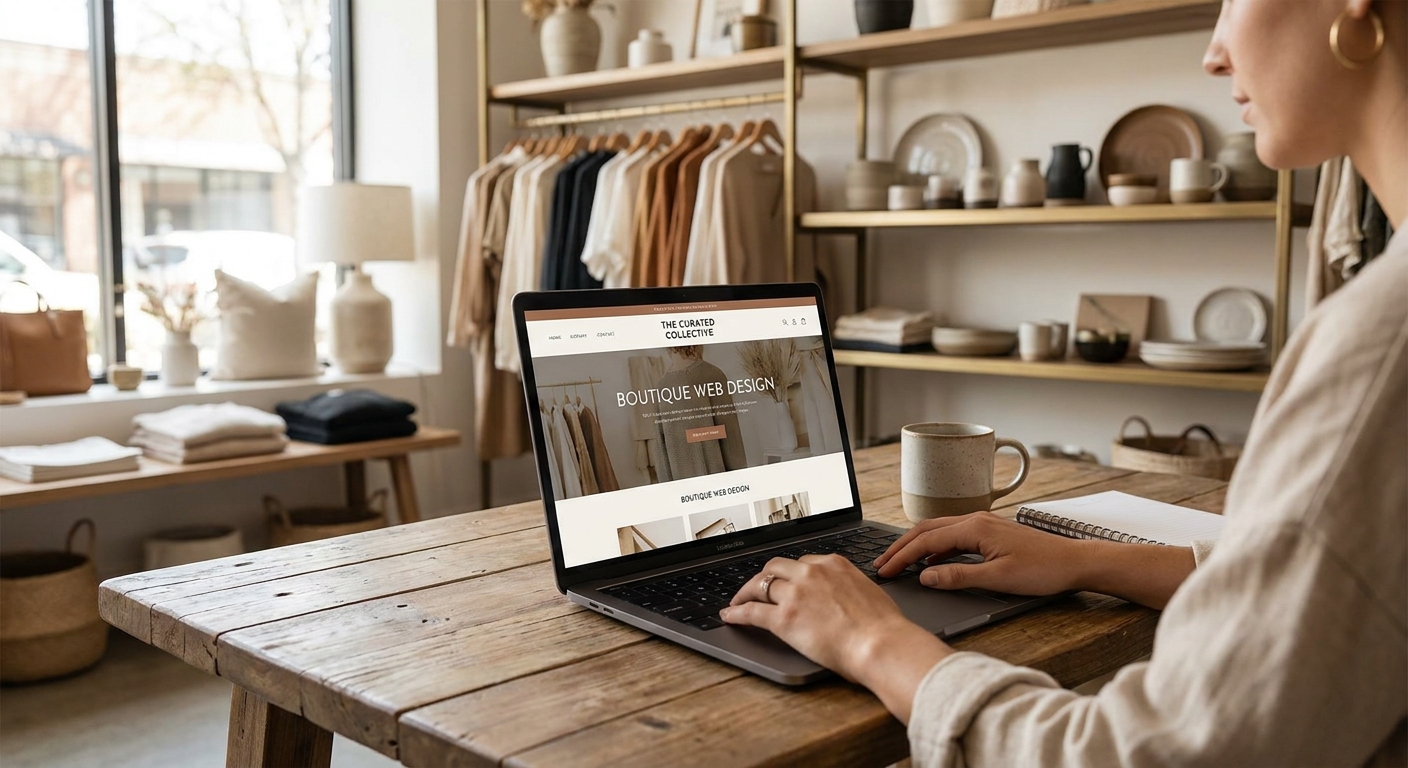
Boutique retailers need a website that photographs product the way a stylist would and processes an online order the way a POS system already does — most template builders and most agency retainers do only one of those two things well. Here's the breakdown of what actually works in 2026, and where each option falls short.
- A flat-monthly subscription build is the safe pick for boutique retail in 2026 — no upfront build fee, cancel with notice.
- DIY platform templates run $16-$49 a month but cap customization exactly where boutique brands need it most.
- Freelance one-off builds cost $3,000-$8,000 upfront and leave you without a developer the day the site breaks.
- Full-service agency retainers at $2,500-$6,000 a month are built for enterprise budgets, not a single storefront.
- Web design for boutique retailers succeeds or fails on product photography, checkout speed, and inventory accuracy.
Why this matters
A boutique retailer isn't competing with a national chain on price. It's competing on taste, curation, and the feeling that someone actually picked every item on the shelf.
A generic template flattens that feeling into stock layout blocks. Small business web design done right treats the site like the storefront window — it's the first impression, not an afterthought.
Most shoppers decide whether a boutique site feels credible within seconds of the homepage loading. If the images look compressed, the fonts clash, or the checkout stalls on mobile, that shopper leaves before finding out the inventory was actually good.
Who this is for
This guide is for owners of independent clothing shops, home goods stores, gift shops, and specialty retail brands running under 10 employees, with a physical location or a small warehouse and a product catalog under a few hundred SKUs. If you're deciding between a platform template, a freelancer, an agency, or a subscription build for 2026, this is the comparison you need before you sign anything.
What to look for in web design for boutique retailers
Product photography that doesn't look like stock filler
Boutique retail sells on visual merchandising — the layout has to give large, uncropped, color-accurate images room to breathe. A template that forces square thumbnails and tight grids kills the exact detail (fabric texture, finish, scale) that gets someone to add to cart.
Checkout built for browsers, not just buyers
Most boutique retail traffic is browsing before it's buying. The checkout flow needs to handle guest checkout, saved carts, and mobile taps without more than three screens between product page and confirmation. Every extra step past three drops conversion.
Inventory and POS sync that doesn't lie about stock
A site that says an item is in stock when the shelf sold out an hour ago erodes trust fast. Real-time or near-real-time sync between in-store POS and the website matters more for boutique retail than for almost any other small business category, because inventory turns fast and quantities are low.
Local search visibility for foot traffic
A boutique with a physical address depends on "near me" searches converting to walk-ins as much as it depends on online sales. The site needs a location page, embedded map, and hours that Google can actually read — not a hidden contact form.
A site that can change with the season
Boutique retail rotates collections monthly, sometimes weekly. If every homepage banner swap or new collection page requires a developer ticket and a two-week wait, the site is already behind the merchandising calendar by the time it updates.
Top picks
The DIY platform build — the fast start. Shopify and Squarespace templates run $16 to $49 a month and get a storefront live in days. One spec that matters: most templates cap custom layout blocks at the theme's built-in sections, which means the product photography treatment above is hard to control without a paid app stack. Consider — fine for a first launch, not built to hold a distinct look past year one.
The one-off freelance build — the custom sprint. A freelance developer typically quotes $3,000 to $8,000 for a small retail site in 2026, delivered in four to eight weeks. The spec that matters: once the site ships, there's usually no maintenance retainer attached, so a broken checkout plugin sits broken until you find and pay someone new. Consider — good for a one-time custom look, risky for anything that needs ongoing updates.
The full-service agency retainer — the overkill. Full agency retainers run $2,500 to $6,000 a month, built around teams and processes sized for multi-location or enterprise retail. The spec that matters: the account structure (strategist, project manager, dev team) adds overhead a single-storefront boutique doesn't need. Skip — the budget doesn't match the scale of one store.
The flat-monthly subscription build — the safe pick. A subscription model bundles the custom build, hosting, and maintenance into one flat fee with no upfront build cost. Nuvora runs boutique retail sites this way: no upfront build fees, cancel with notice, and the QA on every update is done by a person, not a template default. Buy — for a single boutique location managing its own seasonal changes, this is the custom subscription website build built for that exact workload.
Get a boutique retail site quote
See what a flat-monthly subscription build costs for your store in 2026.
What to avoid
- "E-commerce ready" templates that need five paid plugins to sync POS. The advertised price rarely includes the app stack required to make inventory actually accurate.
- Flat build-fee quotes with silent recurring charges. A freelancer or small agency quoting one number upfront sometimes bills separately for hosting, SSL, and "emergency" fixes later — ask what's included past launch before signing.
- Free website builders that lock product photos and copy into their own CMS. Migrating off a locked builder later often means re-shooting or re-writing content you already paid to produce.
Before picking any option, it's worth comparing the actual website subscription plans on the market in 2026 side by side — the flat fee on the label doesn't always match what's billed after month one.
Verdict comparison
| Option | Upfront cost | Monthly cost | Customization | Verdict |
|---|---|---|---|---|
| DIY platform template | $0 | $16-$49 | Low | Consider |
| Freelance one-off build | $3,000-$8,000 | $0 (no retainer) | High at launch, static after | Consider |
| Full-service agency retainer | Varies | $2,500-$6,000 | High | Skip |
| Flat-monthly subscription build | $0 | Flat, cancel with notice | High, ongoing | Buy |
FAQ
What's the best web design for boutique retailers in 2026?
A flat-monthly subscription build is the best fit for most single-location boutique retailers in 2026, because it covers custom design, hosting, and ongoing maintenance without an upfront build fee. Platform templates work for a fast first launch but limit the visual customization boutique retail depends on.
Is Shopify better than a custom build for a boutique store?
Shopify templates are faster and cheaper to launch, running $16 to $49 a month, but they cap layout customization at the theme's built-in sections. A custom build gives more control over product photography and merchandising layout, which matters more for boutique brands than for high-volume commodity retail.
How much does web design cost for a small retail store?
Costs range from $16-$49 a month for a DIY platform template to $3,000-$8,000 upfront for a freelance one-off build, or a flat monthly subscription with no upfront build fee. Agency retainers for enterprise-scale retail run $2,500-$6,000 a month, well past what a single boutique storefront needs.
Do boutique retailers need a mobile-first website?
Yes, because most boutique retail browsing happens on mobile before a purchase decision is made. A checkout that takes more than three screens on a phone drops conversion noticeably compared to a streamlined mobile flow.
How long does it take to build a boutique retail website?
A platform template can go live in days, a freelance custom build typically takes four to eight weeks, and a subscription build timeline depends on the provider's process but usually launches within weeks, not months. Agency retainers often take longer due to account and process overhead.
Can a boutique retailer update website content seasonally without a developer?
On a subscription model, seasonal updates like homepage banners and new collection pages are typically handled as part of the flat monthly fee, without a separate developer ticket. On a one-off freelance build, seasonal changes usually require finding and paying someone after launch.
Is a website subscription plan worth it for a small retailer?
A subscription plan is worth it for a boutique retailer that updates its site regularly and wants to avoid an upfront build fee, since hosting, maintenance, and design changes are bundled into one flat cost. It's less worth it for a retailer that needs zero updates after a single launch.
One last thing
The thing that kills most boutique retail sites in 2026 isn't the design — it's stale product photos sitting on a site that can't be updated without a ticket and a two-week wait. Whatever option you pick, ask one question before signing: how fast can you swap a homepage image the week a new collection lands? If the answer is "not without paying again," keep shopping.