July 29, 2026
Best website platforms for contractors in 2026
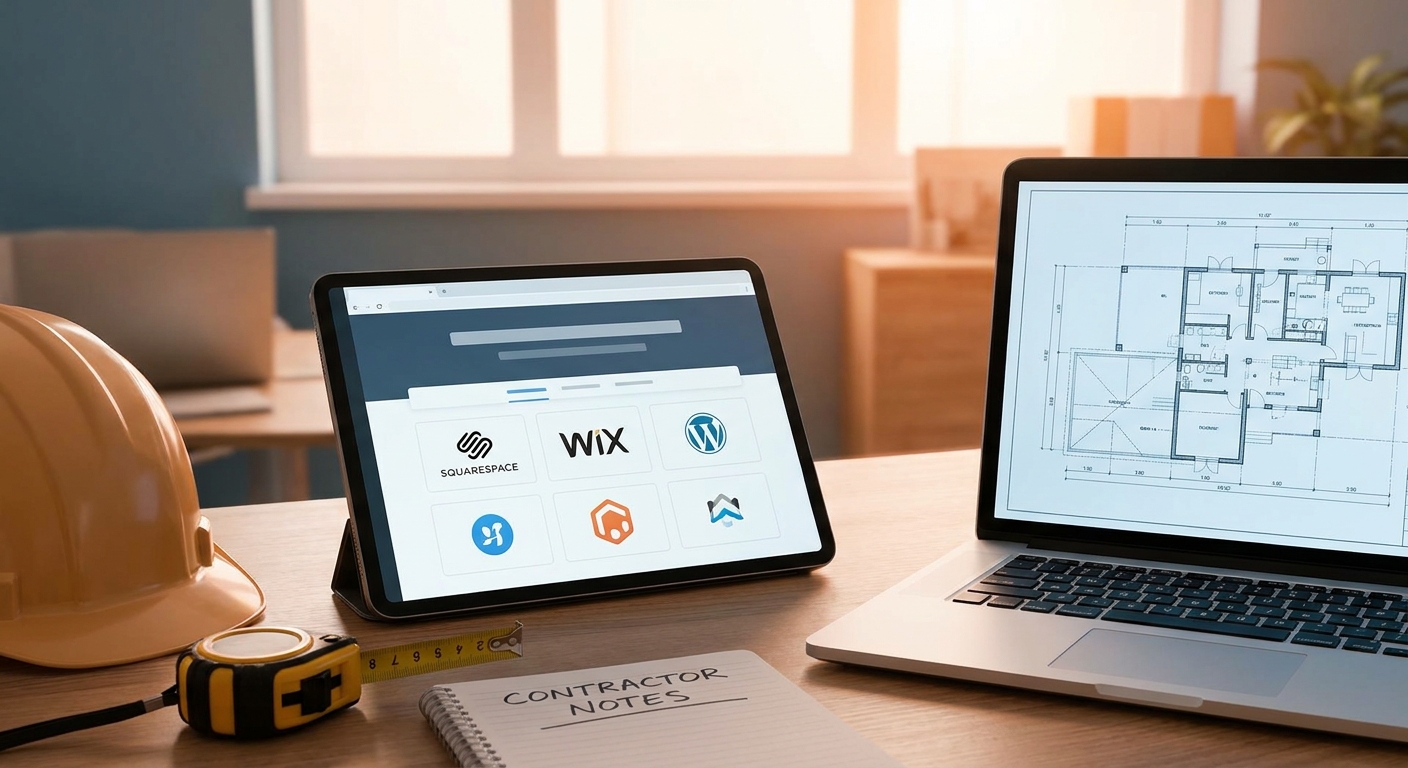
Contractors need websites that work as hard as they do—showcasing past projects, handling inquiries, and converting leads 24/7. The best website platforms for contractors balance ease of use, mobile responsiveness, and features that matter: project galleries, contact forms, service breakdowns, and SEO basics that let customers find you in 2026.
This guide compares five platform categories and specific picks so you can choose what fits your business model, budget, and technical comfort.
How we ranked
We evaluated platforms on five criteria critical to contractor success: mobile performance (75% of contractor searches happen on phones in 2026), project showcase capability (galleries, case studies, before-and-after images), lead-capture speed (how fast you can turn a site visitor into an inquiry), monthly cost and setup friction, and ongoing maintenance burden.
We excluded page-builder platforms that require you to host your own infrastructure and template marketplaces that lock you into annual contracts. The picks below reflect what actually converts inquiries for contractors in 2026—not what has the most features, but what removes friction between a prospect finding you and you getting their job details.
The ranked list
1. Custom-built subscription sites (Nuvora model)
The safe pick for contractors who want hands-off hosting. A custom-built site designed for your specific trade, rebuilt on your domain, hosted on dedicated servers, and updated by a human team. You pay one flat monthly fee ($300–$600 range typical in 2026) and never touch code.
What it does: You get a site that looks like you—not like 50 other contractors using the same template. The builder handles SEO setup, mobile optimization, and performance tuning. You own the domain and data. Updates, security patches, and backups happen automatically.
Why now: Contractors in 2026 face increased local search competition. A custom site built specifically for your service area and trade (plumbing, roofing, HVAC, etc.) ranks better than a generic template. The flat-fee model means no surprise hosting bills, no hourly designer fees when you need a photo swapped. You cancel with notice—no long contract.
Verdict: Buy. This is the only platform category where you own the design, keep your brand intact, and avoid template drift.
2. Wix (DIY with templates)
The wildcard for hands-on contractors. Wix lets you build and edit pages yourself using drag-and-drop blocks. Pricing starts at $17/month for basic hosting, scaling to $55+/month for e-commerce and advanced features.
What it does: You drag photos, text, and forms onto templates. No coding required. Mobile rendering is automatic. Built-in contact forms, appointment booking (add-on), and SEO tools come standard. You can edit your site anytime without waiting for a designer.
Why now: Wix's 2026 portfolio features are stronger than 2025. Before-and-after sliders and image galleries render well on mobile. The learning curve is 2–4 hours for a basic site. If you already have 20+ project photos and know your core message, you can launch in a weekend.
Verdict: Hold. Wix works if you're willing to invest setup time and manage updates yourself. You'll own the site but compete on design with thousands of other contractors using Wix templates.
3. Squarespace (design-first)
The visual-first choice for contractors who photograph their work well. Squarespace charges $15–$33/month depending on features. Known for beautiful-out-of-the-box design and strong mobile rendering.
What it does: Pre-built templates for service businesses include project grids, team bios, and testimonials. Editing is mostly visual drag-and-drop. Built-in blogging, contact forms, and basic SEO tools. Hosting, SSL, and domain registration bundled.
Why now: Squarespace's 2026 portfolio blocks have stronger mobile gallery controls than competitors. If 60% of your leads come from visual work (renovation befores/afters, cabinet finishes, structural repairs), Squarespace showcases that well. Setup takes 3–5 hours for a 5-page site.
Verdict: Consider. Squarespace wins on visual polish. You'll trade flexibility (templates limit page layouts) for faster launch and professional appearance. Best for contractors confident in their photography or willing to hire a photo shoot.
4. WordPress.com (flexibility, higher friction)
The power option for contractors with developer help. WordPress.com managed hosting ranges from $7–$45/month, but customization beyond templates often requires a developer ($1,500–$5,000 setup).
What it does: Full template library, plugin ecosystem (Jetpack for SEO, WP Forms for advanced lead capture, WP Project Showcase for portfolios), and deep customization. You control everything—no restrictions on layout or functionality.
Why now: WordPress still powers 43% of websites globally in 2026. If you know a developer or want to hire one, WordPress offers flexibility that template-first platforms don't. Updates and maintenance require ongoing attention (3–5 hours per month typical).
Verdict: Wait. WordPress makes sense only if you have a budget for a developer or plan to learn code yourself. For contractors under 50 employees, the maintenance overhead typically outweighs the flexibility gains.
5. GoDaddy Website Builder (budget-conscious entry)
The cheapest qualified option. GoDaddy charges $6–$10/month for website hosting with a basic builder.
What it does: Drag-and-drop templates, contact forms, mobile rendering, and domain included. Limited design depth but functional for lead capture. SEO tools are minimal.
Why now: At $6/month, GoDaddy removes cost objection for contractors testing their online presence in 2026. Good enough to get a phone number and service description live fast. Poor for brand differentiation.
Verdict: Skip. The cost savings vanish if you need professional design work or detailed project galleries. You'll look cheaper than you are.
Comparison table
| Platform | Monthly cost | Setup time | Ongoing maintenance | Mobile performance | Custom design | Verdict |
|---|---|---|---|---|---|---|
| Custom-built (Nuvora) | $300–$600 | 2 weeks (builder manages) | None (included) | Optimized | Full | Buy |
| Wix | $17–$55 | 8–16 hours | 2–3 hrs/month | Very good | Template-constrained | Hold |
| Squarespace | $15–$33 | 6–10 hours | 1–2 hrs/month | Excellent | Template-constrained | Consider |
| WordPress.com | $7–$45 + dev costs | 4–8 weeks (with dev) | 3–5 hrs/month | Good (with optimization) | Full | Wait |
| GoDaddy | $6–$10 | 4–6 hours | 1 hr/month | Fair | None | Skip |
What matters most for contractors in 2026
Mobile speed is non-negotiable. 75% of contractor inquiries start on a phone—someone searching "roofers near me" or "plumber in [city]" on a drive. Wix, Squarespace, and custom-built sites all score well here. GoDaddy and self-hosted WordPress often struggle.
Project photography sells work. Your past jobs are your best sales tool. Pick a platform with gallery/portfolio blocks that let you upload 50+ high-res images without manual resizing. Avoid platforms that require portfolio images to stay under 1 MB or that compress aggressively.
Lead forms must be fast. A prospect should hit your "Get a Quote" button and fill out 4 fields (name, phone, email, project description) in under 60 seconds. Long multi-step forms kill conversions. Wix, Squarespace, and Nuvora all support simple 4-field forms.
Domain ownership. You must own your domain (e.g., yourname.com). Platforms that force you to use a subdomain (e.g., yourname.wix.com or yourname.godaddy.com) hurt your credibility and SEO. All five platforms offer custom domains, though some charge extra.
Where to buy and start
For DIY builders (Wix, Squarespace, GoDaddy): Sign up directly at their sites, choose a contractor-focused template, and start uploading photos and text. No contract—month-to-month billing. You can export your content anytime, though moving to a different platform is friction-heavy.
For WordPress: Host with WordPress.com or a third-party host (Bluehost, SiteGround), choose a contractor template, and either customize yourself or hire a WordPress developer through Upwork or local freelancers.
For custom-built: Work with a web design studio like Nuvora that builds sites specifically for trades. Expect 2–4 weeks from signed agreement to live site. The studio handles design, photography direction, and ongoing updates. You own your domain and content; they manage hosting and maintenance under your monthly plan.
- Custom-built sites win for contractors who want brand control and hands-off hosting in 2026.
- Wix and Squarespace suit DIY builders with 10+ project photos and 4–8 hours to set up.
- WordPress needs developer help ($2k–$5k minimum) to compete; skip unless you have budget.
- GoDaddy is cheapest but hurts your credibility—avoid unless testing before bigger investment.
Why this matters
Contractors typically lose 30–40% of leads because their website either doesn't load on mobile, doesn't showcase past work clearly, or makes inquiries hard to submit. A slow or outdated site signals a slow or outdated business—the opposite of what you want. The right platform accelerates your sales cycle by hours or days.
In 2026, "best website platforms for contractors" splits into two buckets: platforms you manage yourself (Wix, Squarespace, WordPress) and platforms managed for you (custom-built studios). The choice depends on whether you have 5+ hours per month to spare for updates, photography, and troubleshooting, or whether you'd rather spend that time on jobsites and invoicing.
FAQ
What's the cheapest website platform for contractors?
GoDaddy Website Builder costs $6–$10 per month in 2026, the lowest tier across all platforms. However, cheap hosting often means slow performance and limited customization. For most contractors, paying $15–$35/month for Wix or Squarespace delivers better ROI through faster load times and professional galleries that convert more leads.
Can I move my website between platforms later?
Moving between DIY platforms (Wix to Squarespace, for example) is friction-heavy and usually requires a designer's help ($500–$1,500). Moving from custom-built or WordPress to another platform is easier if your designer exports your content properly. Always ask about content export before committing to a long-term relationship.
Do I need SEO tools if I'm on a good platform?
A good platform gives you the *capability* to optimize (meta tags, heading structure, mobile rendering, site speed), but you still have to *do* the work: write location-specific descriptions, add project keywords, build local citations. Platforms don't rank you—content and backlinks do. All five platforms above support basic SEO; none do the work for you.
Is a booking or appointment system essential?
No. Most contractors use their website to capture a lead (name, phone, email, job details), then call the prospect directly. Booking systems work better for service businesses with fixed appointment slots (salons, gyms). If you prefer to quote over the phone, skip the booking add-on and use a simple contact form.
How much does web design cost if I hire a professional?
Custom-built sites from design studios cost $3,000–$8,000 upfront, then $200–$600/month for hosting and maintenance in 2026. Freelance designers often charge $1,500–$3,500 for a 5–10 page site. Subscription-model studios like Nuvora include design, hosting, and updates in one flat monthly fee, typically $300–$600.
Should I choose a platform that specializes in my trade?
Yes, if available. A template or custom design built specifically for roofers, plumbers, or HVAC contractors will include trade-specific sections (warranty info, service areas, common problems) that generic builder templates don't. This also helps local SEO—Google recognizes contractor-specific sites as more relevant to local searches.
One last thing
The biggest mistake contractors make is launching a website and leaving it static. A site built in 2024 that hasn't been updated since ranks worse in 2026 than a site updated monthly. Pick a platform where updates take 15 minutes, not 2 hours—that's the difference between a site that stays current and one that slowly decays.
If you're in a competitive market (plumbing, roofing, HVAC in a city over 100,000 people), a custom-built site designed specifically for your trade and service area will outrank a generic template in Google local results. The cost difference ($300/month vs. $20/month) pays for itself in the first qualified lead.