August 9, 2026
Best Website Features for Storage Facilities (2026)
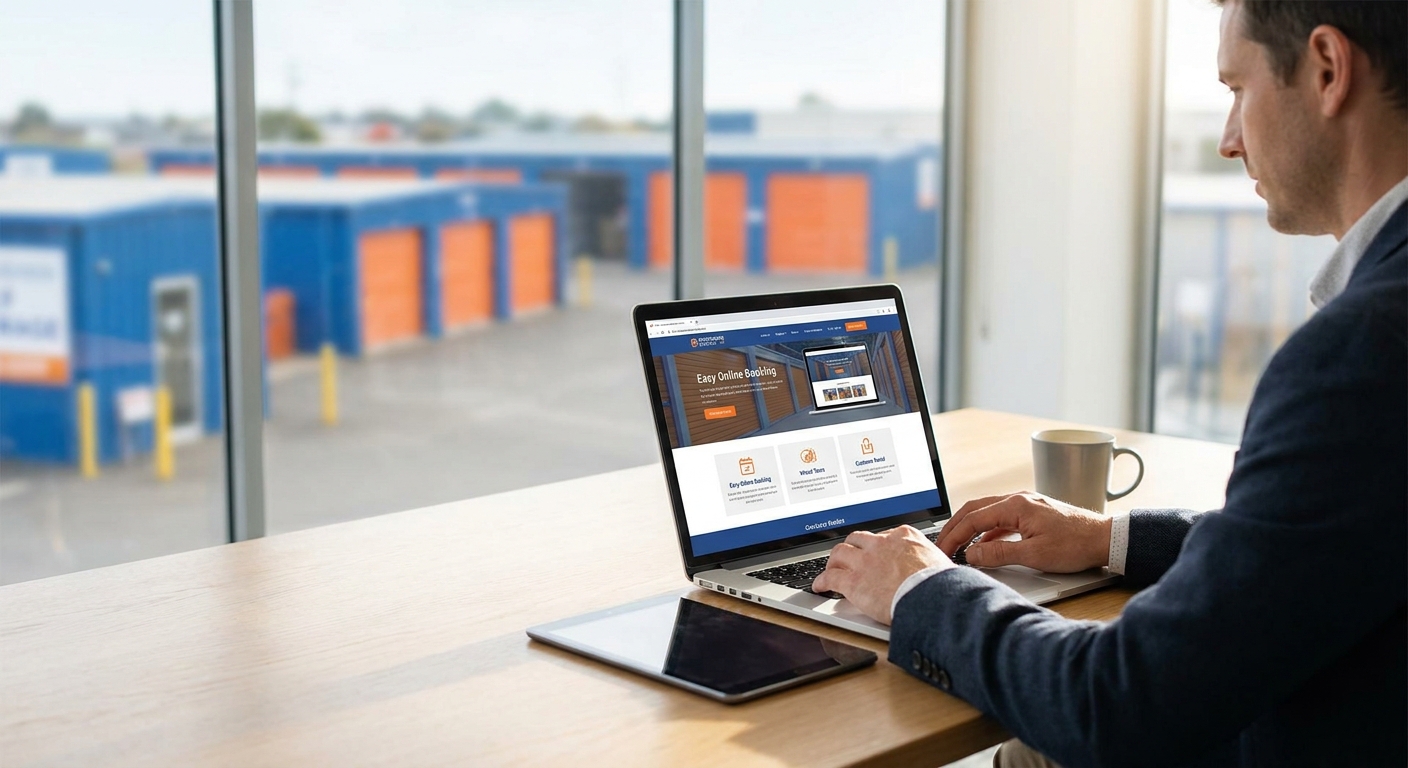
Self-storage websites live or die on one thing: can a renter reserve a unit without calling anyone. Rank these ten features by how directly they drive rentals, and you get a clear build list for 2026 — not a wish list.
- Real-time unit availability with online rental is the top website feature for storage facilities in 2026 — Buy.
- Gate access tied to payment status stops overdue tenants from entering automatically — Buy.
- Google Business Profile integration matters more than a blog for storage search — Buy.
- Skip heavy animation and video backgrounds; they slow mobile load on 4G in rural markets.
- A CRM for waitlists beats a contact form when every unit size sells out by season.
Why this matters
A storage renter searching at 11pm wants a size, a price, and a way to book before they change their mind. If your site makes them call during business hours, they book the competitor with an online rental button. The features below aren't decoration — each one either removes a step between "searching" and "paying" or protects the facility once the tenant moves in.
2026 is also the year Google's local pack decides most of this. Three map results show above any organic listing for "storage near me" searches, and a site with weak local signals never gets a shot at that pack regardless of how good the design is.
How this list is ranked
Each feature is ranked by how directly it affects a rental decision, not by how impressive it looks in a demo. Features that remove a phone call rank above features that just look good. Features tied to security and payment protection rank above cosmetic upgrades, because a storage facility's liability profile is different from a retail site's. The verdicts (Buy / Hold / Wait / Skip) reflect whether a facility website should have the feature now, later, or not at all.
The ranked list
1. Real-time unit availability with online rental
The single highest-converting feature on a storage facility site. A renter picks a size — 5x5 up to 10x30 is the standard range most facilities carry — sees what's open today, and reserves it without a phone call.
Static "call for availability" pages lose renters who are already comparing three other facilities in the same tab. A live availability grid, even a simple one, turns browsing into a transaction. Pair it with the same principles used for best website features for local service businesses — clear pricing, clear next step, no friction. Buy.
2. Instant online booking and move-in scheduling
Once a unit is reserved, the renter needs a move-in time. A booking calendar that locks in a date and sends a confirmation replaces the back-and-forth of a phone tag.
This matters more for facilities that require a staff walkthrough or gate orientation before first access. The same scheduling logic used across appointment scheduling tools for service businesses applies directly here — one calendar, automatic reminders, no double-booked slots. Buy.
3. Google Business Profile and local SEO wiring
Storage search is almost entirely local intent: "storage units near me," "climate controlled storage [city]." A website with the right schema markup, NAP consistency, and review funnel feeds that Google Business Profile directly.
Skip this and the site can be well-designed and still invisible in the map pack. The setup mirrors what's covered in best local SEO features for small business websites — location pages per facility, embedded maps, and structured hours. Buy.
4. Gate access tied to payment status
A feature specific to storage that most agencies skip: the website's payment portal should talk to the gate access system. Miss a payment, lose access, automatically — no manager has to drive out and manually disable a code.
This protects revenue and reduces the liability of an overdue tenant loading a truck at 2am. It's a security integration, not a cosmetic one — the same category discussed in best website security features for small business sites. Buy.
5. CRM and waitlist capture
Facilities sell out by unit size during peak season — 10x10 units go first every spring. A CRM that captures "notify me when a 10x10 opens" beats a generic contact form that gets checked once a day.
This is the difference between losing a lead and converting it three weeks later when a unit frees up. The integration pattern is the same one covered in best CRM integrations for small business websites. Buy.
6. Mobile-first layout
Most storage searches happen on a phone, often from a truck rental counter or a moving van. A layout that loads fast on a weak connection and puts the rental button within thumb reach outperforms a desktop-first design every time. Buy.
7. Autopay and online payment portal
Tenants expect to pay rent the same way they pay any other bill — card on file, autopay, no envelope. A portal that shows balance, due date, and payment history reduces late payments and phone calls to the front office. Buy.
8. Interactive facility map or directory
Multi-building facilities benefit from a visual map showing which building holds which unit sizes. Single-building operations don't need this — it's a nice-to-have, not a conversion driver. Hold.
9. Review and testimonial widget
Reviews matter for trust, but a widget pulling live Google reviews onto the homepage does more work than a curated testimonials page that never updates. Hold.
10. Video backgrounds and heavy animation
Common request, poor return. Autoplay video backgrounds slow load time on mobile and add nothing a static photo of clean, well-lit units doesn't already communicate. Skip.
“If a renter has to call to find out if a unit is available, the website already lost the sale.”
Comparison table
| Feature | Why it matters for storage | Verdict |
|---|---|---|
| Real-time availability + online rental | Removes the call before the booking | Buy |
| Online booking / move-in scheduling | Confirms move-in without back-and-forth | Buy |
| Google Business Profile + local SEO | Wins the map pack for "near me" searches | Buy |
| Gate access tied to payment status | Cuts unpaid access automatically | Buy |
| CRM + waitlist capture | Converts leads when units free up | Buy |
| Mobile-first layout | Matches where searches actually happen | Buy |
| Autopay / payment portal | Reduces late payments and calls | Buy |
| Interactive facility map | Useful only for multi-building sites | Hold |
| Review widget (live pull) | Builds trust passively | Hold |
| Video backgrounds | Slows load, adds no rental value | Skip |
How to get these built
- Custom code beats a template for the payment-to-gate integration. Page builders can fake a booking form; they can't reliably wire a payment portal to a physical access system.
- Bundle hosting and support with the build. A storage site holds payment data and access logic — it needs monitoring, not a one-time launch and goodbye.
- Ask what happens after month one. A subscription model with no upfront build fee spreads design, development, hosting, and support into one predictable plan instead of a big invoice followed by silence.
Get a storage website that rents units, not just looks good
Custom-built, hosted, and supported — no upfront build fee.
FAQ
What's the best website feature for a storage facility in 2026?
Real-time unit availability paired with online rental is the top feature in 2026. It lets a renter book a 5x5 to 10x30 unit without calling, which is the single biggest driver of conversions on a storage site.
Is online booking better than a phone-in reservation for storage units?
Yes, online booking wins because most storage searches happen outside business hours. A calendar that confirms a move-in slot instantly beats waiting for a callback the next morning.
How much does a storage facility website cost to build?
Costs vary by scope — a basic site with availability and booking differs from one with gate access integration and a payment portal. Check current subscription and quote options directly with a builder rather than assuming a flat number.
Do storage facilities need a CRM on their website?
Facilities that regularly sell out of popular sizes benefit from a CRM with waitlist capture. It converts a lead weeks later when a 10x10 or 10x20 unit reopens instead of losing that contact entirely.
Does gate access need to connect to the website's payment system?
It doesn't have to, but facilities that link the two cut unpaid access automatically instead of relying on a manager to manually disable a code after a missed payment.
Is a mobile-first design necessary for a storage website?
Yes, because most searches for storage happen on a phone, often mid-move. A mobile-first layout with fast load and a visible rental button converts better than a desktop-first site.
Should a storage facility website have a blog?
A blog helps local SEO indirectly, but Google Business Profile setup and location pages matter more for storage search than blog content does.
What storage website features should be skipped?
Autoplay video backgrounds and heavy animation add load time without adding rental value. A clean photo of well-lit units does the same job faster.
One last thing
The feature that gets overlooked most in 2026 isn't design — it's the payment-to-access link. A storage site with a beautiful booking flow but no automatic gate lockout for unpaid accounts still needs a manager driving out at odd hours to disable codes by hand. Fix that one integration and the website starts running the facility, not just marketing it.