July 24, 2026
Web Design for Plumbers: Best Option in 2026
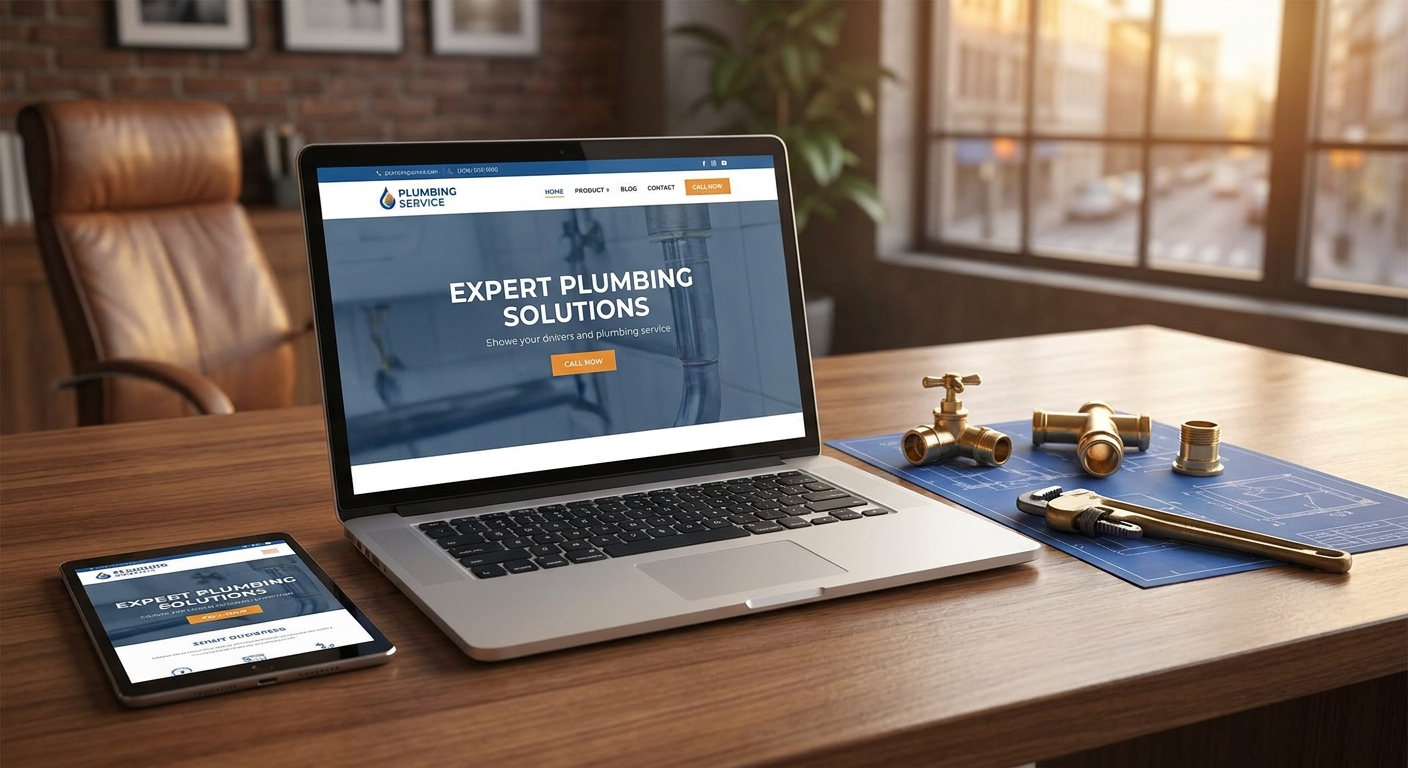
Plumbers who invest in a mobile-fast, easy-to-update site turn more emergency searches into booked jobs than plumbers running a five-year-old template or no site at all. Here's how to evaluate web design for plumbers in 2026, and which build path actually holds up once the site goes live.
- Nuvora's subscription model wins web design for plumbers who need ongoing updates without a five-figure rebuild. Buy.
- DIY builders are cheap upfront but stall on service-area pages and tap-to-call buttons. Skip for growth-focused plumbers.
- Freelance marketplace builds are a coin flip: fine for one static page, risky once forms or SEO are involved. Consider only with a written contract.
- One-off agency builds look sharp at launch then go stale by year two with nobody maintaining them. Consider only if the budget covers ongoing dev.
Why this matters
A plumbing call is usually a phone-first, right-now decision. Someone's basement is flooding or the water heater died, they search on a phone, and they tap the first result that looks credible and loads fast. A site that takes six seconds to load or buries the phone number in a footer loses that job to whichever competitor answers first.
This is why web design for plumbers isn't the same problem as web design for a boutique or a law firm. The site has one real job: turn a panicked mobile search into a phone call or a submitted quote request in under a minute. Nuvora builds and maintains that kind of site under one flat monthly subscription, with no upfront build fee and no five-figure invoice waiting at launch.
Who this is for
This guide is for owner-operator plumbers and small crews of 2 to 10 techs running on word-of-mouth, a Google Business Profile, and maybe an old site nobody's touched since it launched. If you're competing against a national franchise's paid ads and need a site that actually books jobs instead of just existing, this is your buyer profile.
What to look for in web design for plumbers
Mobile speed and tap-to-call
Most plumbing searches happen on a phone, mid-emergency, with someone standing in a wet basement. A tap-to-call button in the header isn't a nice-to-have here; it's the entire conversion path. If the phone number requires a scroll or a pinch-zoom to find, the job goes to the next listing.
Service-area pages for every zip code you cover
A single "Service Areas" page listing five towns in one paragraph doesn't rank for any of them individually. Plumbers who show up in local search have a dedicated page per town or zip code, each naming the specific services offered there. This is the single biggest local SEO gap in plumbing sites built in the last decade.
Before/after photos and review proof
Plumbing is a trust business before it's a price business. Homeowners want to see actual pipe replacements, actual water heater installs, and actual reviews before they let a stranger into their house. A gallery of stock photos does the opposite of what it's meant to do.
Quote-request forms that skip the contact-page maze
If getting a quote requires navigating to a separate "Contact" page, filling in eight fields, and waiting for a confirmation email, most mobile users bail. A short form embedded near the top of the service page, or a call button right next to it, converts far better.
Someone who actually updates the site after launch
A plumbing site that never changes goes stale fast: seasonal promotions expire, new service areas don't get added, and a broken form can sit undetected for months. The build matters less than who's responsible for keeping it working after month one.
Top picks
DIY website builder (Wix, Squarespace, GoDaddy) — the cheap start. Monthly cost sits in the $16 to $49 range on most builder plans, but service-area pages and call-tracking integrations require manual work most plumbers never get around to. Verdict: Skip unless you have real time to maintain it yourself.
Freelance marketplace build (Fiverr, Upwork) — the coin flip. You'll find a design for a few hundred dollars, but quality and post-launch support vary wildly from one freelancer to the next, and most contracts end the day the site goes live. Verdict: Consider, only with a written scope and a plan for who fixes bugs in month three.
One-off custom agency build — the sprint that stalls. You get a sharp, custom design at launch, often for a fixed project fee in the thousands, but most agency contracts don't include ongoing updates once the invoice is paid. Verdict: Consider, only if your budget covers a separate maintenance retainer.
Nuvora's subscription website — the safe pick. One flat monthly subscription covers the build, hosting, and maintenance, with no upfront build fee and cancellation available with notice instead of a long lock-in contract. The judgment, the QA, and the relationship stay human instead of running through an AI template generator. Verdict: Buy for plumbers who want the site to keep working without a separate maintenance bill showing up later.
What to avoid
- Generic plumbing templates every competitor already uses. If the layout, stock photo of a wrench, and blue-and-white color scheme look familiar, it's because half the plumbers in your metro area are running the same template.
- Missing service-area pages. A homepage that mentions "serving the greater metro area" without naming individual towns loses local search rankings to competitors who bothered to build them out.
- Quote forms buried behind a portfolio gallery. Photos of past jobs matter, but not more than the form that turns a visitor into a booked call.
Verdict comparison table
| Criteria | DIY Builder | Freelancer | One-off Agency | Nuvora Subscription |
|---|---|---|---|---|
| Mobile speed / tap-to-call | Manual setup | Varies | Strong at launch | Built in |
| Service-area pages | DIY, rarely done | Case by case | Included at launch | Included, updated over time |
| Photo/review proof | DIY | Case by case | Included at launch | Included, refreshed |
| Quote-request forms | Basic plugin | Case by case | Included at launch | Included |
| Ongoing updates | On you | Rarely included | Separate retainer | Included in subscription |
| Verdict | Skip | Consider | Consider | Buy |
FAQ
What's the best web design approach for a small plumbing business in 2026?
A subscription-based build that includes hosting and ongoing maintenance is the safest approach for a small plumbing business in 2026, since it avoids a large upfront invoice and keeps the site updated after launch. DIY builders work only if you have real time to maintain service-area pages and forms yourself.
Is a custom website better than a template for plumbers?
A custom-built site outperforms a generic template because it can include service-area pages, tap-to-call buttons, and review sections built specifically for plumbing leads. Template-based DIY sites can work short term but usually require manual setup for the features that actually convert calls.
How much does web design for plumbers cost in 2026?
Costs range from around $16 to $49 a month on DIY builder plans, to a few hundred dollars for a freelance build, to project fees in the thousands for a custom agency site. Subscription models like Nuvora's roll the build, hosting, and maintenance into one flat monthly fee instead of a large upfront cost.
Do plumbers need a separate page for each service area?
Yes, a dedicated page per town or zip code ranks far better in local search than one page listing multiple areas in a single paragraph. This is one of the most common gaps in plumbing sites built before 2026.
Should a plumbing website have a quote request form?
Yes, a short quote form placed near the top of the service page converts better than routing visitors to a separate contact page. Combine it with a visible phone number for mobile users who want to call instead of type.
How important is mobile speed for a plumber's website?
Mobile speed matters more for plumbers than most industries because searches happen mid-emergency on a phone. A slow-loading site loses the call to whichever competitor's site loads and answers first.
Who should maintain a plumbing website after launch?
Whoever built it should have a clear plan for post-launch updates, since seasonal offers, new service areas, and broken forms need regular attention. Subscription models like Nuvora's include this maintenance in the monthly fee instead of leaving it to a separate retainer.
Can a plumber build their own website instead of hiring someone?
A plumber can build a basic site on a DIY platform, but service-area pages, call tracking, and review integrations usually require more setup time than most owner-operators have. Consider it only if you're prepared to maintain it yourself long term.
One last thing
The plumbing sites that actually book jobs in 2026 aren't the prettiest ones — they're the ones where the phone number is tappable within one thumb-reach of the homepage load, on every single page, including the 404 page. Check your own site right now on a phone with one hand; if you can't dial in under three taps, that's the fix to make before touching anything else.