July 25, 2026
Web Design for Landscaping Companies: 2026 Verdict
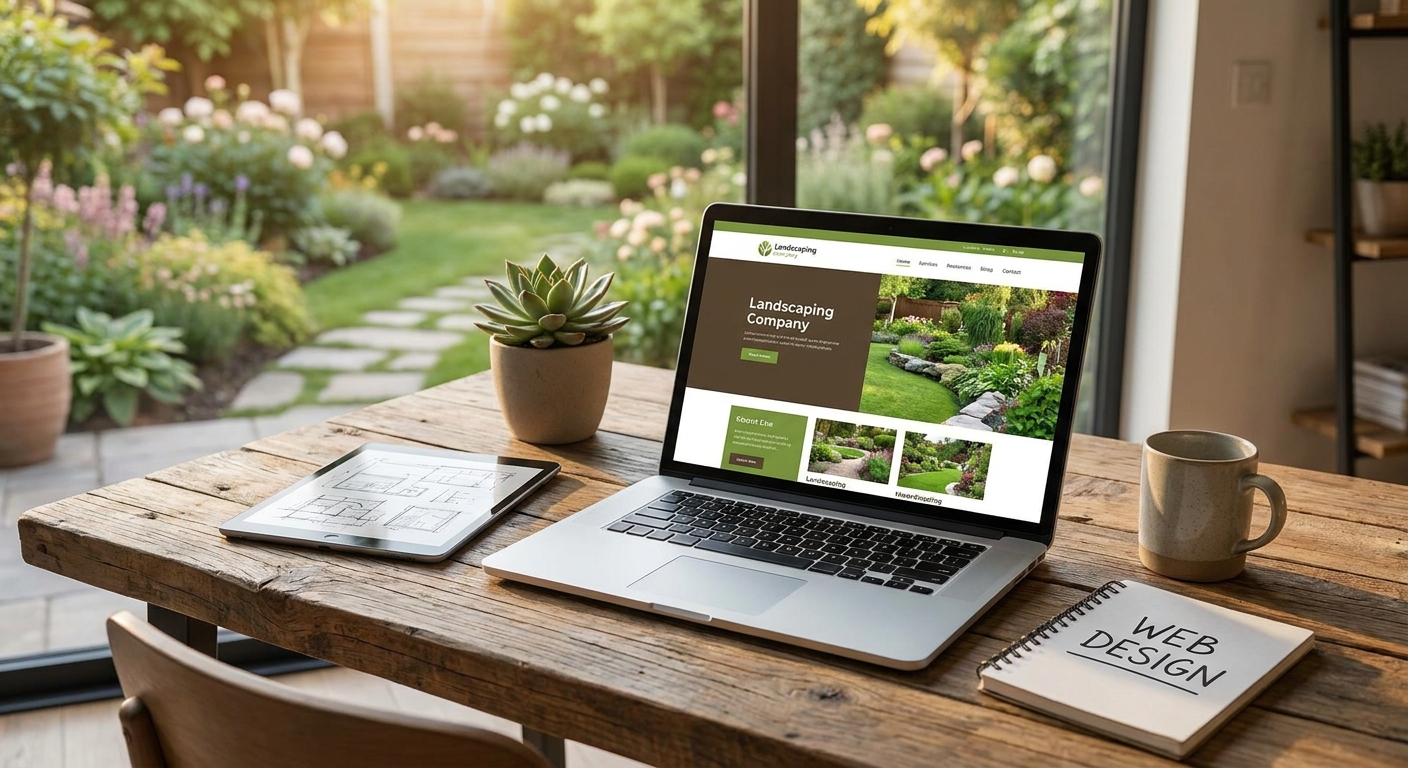
Landscaping companies win jobs on photos, not paragraphs — a site built for lawn care, hardscaping, and design-build crews has to load fast, show real project work, and make it dead simple to request a quote before the homeowner calls two more companies.
- Web design for landscaping companies needs photo galleries that load in under 3 seconds or homeowners bounce before quoting.
- Service-area pages for each town you serve outperform one generic service-area page in local search in 2026.
- A subscription build like Nuvora's flat-monthly plan is the safe pick for crews without an in-house web person: Buy.
- Generic DIY templates handle text fine but choke on the large before-after photo sets landscaping sites need: Skip.
- Freelance one-off builds work short term but stall once seasonal updates and maintenance pile up after year one: Consider.
Why this matters
A landscaping company's website is a portfolio first and a brochure second. Homeowners comparing three quotes are scrolling photos of retaining walls, sod jobs, and paver patios — not reading service descriptions.
If the gallery loads slow on a phone in a driveway, that homeowner is already dialing the next name on the list. This is why web design for landscaping companies needs a different priority order than a typical small-business site: speed and proof-of-work come before copy.
Nuvora builds these sites under a flat monthly subscription that includes custom design, hosting, and maintenance — the same flat-monthly subscription model applies whether the client is a landscaping crew, a plumber, or a restaurant, because the underlying problem (owners with no time to manage a website) is the same across trades.
Who this is for
This guide is for owners of lawn care, hardscaping, tree service, irrigation, and design-build landscaping companies with a crew of 2 to 50 people who get most of their leads from local search and referrals, not national ad budgets. If your business runs on "before and after" photos and seasonal work — spring cleanups, fall leaf removal, snow contracts — the site has to be built around that rhythm, not a static one-page template.
What to look for in web design for landscaping companies
Photo galleries that don't slow the site down
Landscaping sells on visuals, which means the gallery is the heaviest part of the site and the easiest place to lose visitors. Uncompressed photos from a phone camera can push a page past 5MB, and a page that takes more than 3 seconds to load on mobile loses a big share of visitors before it even renders. A build that compresses and lazy-loads images matters more here than for almost any other trade.
Service-area pages, not one service-area line
A landscaping company serving 8 towns needs 8 pages, not one paragraph listing them. Google ranks "landscaping company in [town]" searches against pages built for that town — a single generic service-area sentence buried on the homepage doesn't compete in 2026 local search results the way a dedicated page does.
A real quote request form, not just a phone number
Homeowners requesting landscaping quotes want to describe the job — square footage, type of work, timeline — before they get a call. A form that only asks for name and email pushes that friction onto a phone call the homeower may not want to make yet.
Seasonal content sections
Snow removal, spring cleanup, and fall leaf removal are different searches at different times of year. A site structured to update seasonal service pages without a full rebuild keeps the business visible year-round instead of ranking only for its busiest season.
Before-and-after presentation
Side-by-side or slider-style before-after images do more selling than any paragraph of copy. This is the same visual-proof problem photographer sites solve — heavy image work has to look sharp and load fast at the same time, or the proof itself becomes the reason a visitor leaves.
Mobile-first layout
Most homeowners looking up a landscaping company do it from a phone, often standing in their own yard. A desktop-first layout that gets shrunk down for mobile is the wrong build order for this audience.
Top picks: how to actually get the site built
The safe pick: a flat-monthly subscription build. Nuvora builds the site custom, then hosts and maintains it under one flat monthly plan with no separate upfront build invoice. Verdict: Buy — this fits a landscaping owner who wants seasonal pages updated without hiring anyone or touching code themselves.
The fast fix: a DIY website builder template. Drag-and-drop builders get a basic 5 to 6-page site up in a weekend. The tradeoff shows up fast once the photo gallery grows past 20-30 images and load times start slipping. Verdict: Skip for any landscaping company relying on visual proof to close jobs.
The custom gamble: a freelance one-off build. A freelancer can deliver a strong custom design for a fixed project fee. The gap appears in year two, when seasonal pages need updating and the freelancer has moved to other clients. Verdict: Consider only if you have someone in-house who can manage updates after handoff.
The maintenance trap: WordPress plus a plugin stack. This route is flexible and can look sharp initially, but landscaping owners rarely have time to manage plugin updates, security patches, and image optimization plugins on top of running crews. Verdict: Skip for owners without in-house web management time.
What to avoid
- Stock photos of generic lawns. They look professional in the mockup and kill trust the second a homeowner realizes it's not your actual work.
- One "Contact Us" form for every service. A general contact form for a company offering mowing, hardscaping, and snow removal forces the homeowner to explain the job from scratch on a call.
- Heavy animation on mobile. Parallax scroll effects and video backgrounds look impressive on a laptop and stall load times on the phone screens where most landscaping searches actually happen.
Verdict comparison
| Approach | Photo gallery speed | Service-area pages | Ongoing maintenance | Verdict |
|---|---|---|---|---|
| Nuvora subscription build | Optimized, built in | Custom per town | Included monthly | Buy |
| DIY builder template | Slows past 20-30 photos | Manual, limited | Owner-managed | Skip |
| Freelance one-off | Depends on builder | Built once | No ongoing support | Consider |
| WordPress + plugins | Needs plugin tuning | Manual | Owner-managed | Skip |
The judgment on which photos to feature, the QA on load speed, and the relationship with whoever updates the site each season are all human decisions — no template makes them for you.
“The judgment, the QA, and the relationship are all human, and that's exactly what a landscaping site needs when the season changes twice a year.”
FAQ
What's the best web design approach for landscaping companies in 2026?
A subscription-based custom build with service-area pages and an optimized photo gallery performs best for landscaping companies in 2026, since it covers seasonal updates without a separate rebuild cost. DIY templates struggle once the photo gallery grows past 20-30 images.
Is a DIY website builder good enough for a landscaping company?
A DIY builder works for a very small crew with under 10 project photos, but it typically slows down once the gallery grows, which hurts homeowners browsing on mobile. Most landscaping companies rely on photo volume to sell jobs, so this is a real limitation.
How many service-area pages should a landscaping website have?
One dedicated page per town or county served performs better in local search than a single page listing all service areas. A company serving 8 towns should have 8 separate pages, each built around that location's search terms.
How much does landscaping website design cost per month?
Pricing varies by provider and scope, so check current plan details directly with whichever studio you're considering. A flat monthly plan that bundles hosting and maintenance avoids a large separate upfront build invoice.
Does a landscaping website need seasonal pages?
Yes, because searches for snow removal, spring cleanup, and fall leaf removal happen at different times of year and rank against dedicated pages. A site that can add or update seasonal pages without a full rebuild stays visible across all four seasons.
What page load speed should a landscaping website target?
Photo-heavy landscaping pages should load in under 3 seconds on mobile, since slower load times push visitors to the next search result. Image compression and lazy loading are the two levers that keep gallery-heavy pages fast.
Should a landscaping company use before-and-after photo sliders?
Yes, side-by-side or slider-based before-after images convert better than written descriptions of the same job. They function as visual proof of work in a category where homeowners are comparing multiple quotes.
One last thing
The single biggest mistake on landscaping sites isn't the design — it's the quote form. A form that asks only for name and phone number pushes every detail onto a phone call, and in 2026 more homeowners than ever expect to submit job details online before they'll pick up that call at all.